Description
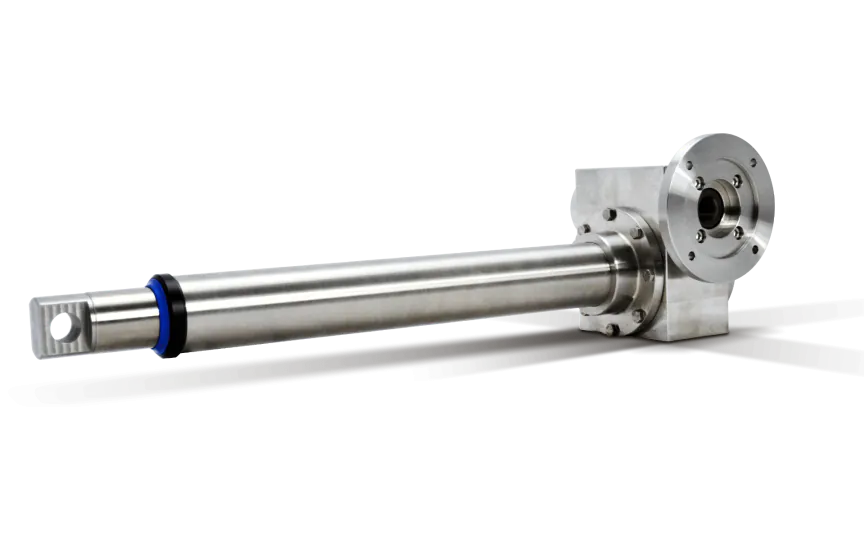
An electric linear actuator is primarily used in applications requiring intermittent axial movement and precise positioning. Compared to hydraulic and pneumatic cylinders, electric actuators offer a clean and efficient alternative due to their direct integration with electrical control systems and their inherent hygienic advantages.
As the actuator operates without hydraulic fluids or compressed air, there is no risk of leakage. Combined with its acid-proof stainless steel construction, this makes it especially suitable for hygiene-critical environments such as food, beverage, and pharmaceutical production. In addition, electric actuators provide a constant and controlled speed across the entire load range, unlike hydraulic or pneumatic solutions where speed may vary with pressure and load.
The dynamic tensile and compression force of standard versions is up to 28.23 kN, with higher force levels available through customised solutions.
Actuators with trapezoidal spindle
This actuator type features a simple and robust mechanical design, based on BJ-Gear worm gearboxes combined with cylindrical acid-resistant stainless steel tubes and an internally threaded spindle. The trapezoidal spindle ensures high load capacity, self-locking characteristics, and reliable positioning.
When configured with a ball screw, linear speeds of up to approximately 2800 mm/min can be achieved in standard products. Higher speeds and extended performance ranges are available through customised configurations.
Protection
The stainless steel actuator is rated IP69K, allowing it to be cleaned with high-pressure, high-temperature water from all directions, including exposure to aggressive and acidic cleaning agents. During IP69K testing, the actuator is sprayed at angles of 0°, 30°, 60° and 90° for 30 seconds at each position, from a distance of 10–15 cm, using water at a minimum temperature of 80 °C and a flow rate of 14–16 litres per minute. The actuator is mounted on a turntable rotating at 5 rpm during the test.
This level of protection requires an equally high resistance to dust ingress, resulting in the IP69K classification, which is widely recognised and required within the food processing industry.
Maximum permissible axial load
The maximum permissible axial load of the trapezoidal spindle (buckling load) depends on the selected stroke length and configuration, as illustrated below.
Specifications
JOSMAR Food Tech
JOSMAR Food Tech has replaced hydraulic systems with BJ-Gear’s electric actuators in their food processing machinery. The change improves hygiene, simplifies cleaning, and reduces maintenance. JOSMAR also gains better control of speed, positioning, and force, ensuring greater flexibility and customization. This collaboration shows how BJ-Gear’s electromechanical solutions help manufacturers meet strict industry demands while boosting competitiveness.

Datasheets